Diagnose
A paid diagnostic, scoped to named projects or a named market. You receive the written assessment and decide what happens next.
In weeks, not months
Project finance advisory and intelligence
Mayava checks, prepares and de-risks projects for the governments, companies and investors behind them. We do the homework — the record, the numbers, the partners — so decisions rest on facts, not assumptions. We work corridor by corridor, wherever capital and projects need to meet.
Our founder's record
The problem
Before a government commits public money, a company bids for a contract or an investor signs, someone has to answer a few plain questions:
The answers usually exist — spread across ministries, development banks, tender portals and the records of past projects. Bringing them together takes time, access and judgement that few teams have in-house. So decisions are made on assumptions, good projects stall, and capital waits.
That is the gap we close.
Who we help
Different institutions ask different questions. The work underneath is the same: find out what is true, and say it plainly.
We review your shortlist project by project: what can be evidenced to the standard lenders require, what is missing, and which projects should wait or stop.
Request a readiness review → Companies entering new markets Is this opportunity real, can we win it, and can our partners deliver?We screen opportunities and tenders abroad, check who is really funding them, and verify local partners against the public record — before you spend on a bid.
Discuss a market → Investors, funds and banks Does the evidence support the investment case?We assess a project or a pipeline against your own criteria and show you where the evidence holds and where it does not. The decision stays yours.
Discuss an assessment → Partners who want to open a corridor Is there business between your market and another — and can we build it together?If you have the relationships in one market and see the demand in another, we can open a corridor together: a shared pipeline, the Mayava method behind it, and in time a Mayava office.
Open a corridor with us →What you receive
Every engagement ends in a written assessment you can put in front of a board, a credit committee or a minister.
When the evidence isn't there, we tell you. "Not yet" is a result we deliver — and it is often the most valuable one, because it arrives before the money is spent.
How we work
A paid diagnostic, scoped to named projects or a named market. You receive the written assessment and decide what happens next.
In weeks, not monthsIf you go ahead, we help close the gaps — documentation, data, partners and structure — to the standard the financier will ask for.
Scoped project by projectThrough negotiation, contract and financial close, working alongside the legal, technical and financial specialists the deal needs.
Until the project movesWhy Mayava
Our founder spent four years advising the Board of the African Development Bank, and two decades in government and diplomacy. We know what a lender, a ministry or a credit committee will ask — because we have asked it.
We source and grade every figure we use. You see what is solid, what is an estimate and what is missing — nothing is asked to be taken on trust.
Governments, development banks, companies and investors each speak a different language. We have worked inside all four, and we translate between them.
Corridors
A corridor connects a country whose companies, capital and expertise are ready to invest with a market where projects need them. Each corridor has its own presence on the ground and works in its own languages, under one method.
Corridor 01 · Korea–Africa · Seoul Open
Over the past twenty years, Africa and Korea have each grown on their own terms, and drawn closer through a cooperation framework built step by step, from the Korea–Africa Economic Cooperation Conference in 2006 to the Korea–Africa Summit in 2024. The business between them did not follow, and since 2014 it has moved the other way.
Africa's imports have more than doubled since 2006, and so have Korea's exports to the world. Yet Korea's exports to Africa are back at their 2006 level, and Korean firms' construction orders on the continent have stayed below that level in almost every year since 2015.
The capital and the will are there. What is missing is the evidence a Korean company or lender needs to commit to a specific project. That is the gap Mayava / Seoul works on: finding projects that stand up, preparing to compete for them, and verifying the partners they depend on.
Indexed, 2006 = 1, latest year, logarithmic scale. Bars to the left of the line are below their 2006 level. Exports to Africa exclude vessels registered in Liberia. Africa's 2025 imports are preliminary.
Sources: World Bank, World Development Indicators, 54 African countries, imports from WTO A · UN Comtrade, Korea's exports A · International Contractors Association of Korea, orders by region A. Retrieved September–October 2026. A = official primary.
Grow with us
Mayava grows through partners: people and institutions with deep relationships in one market who see the demand in another. You bring the network and the local standing. We bring the method, the brand, the institutional record and the discipline of a working pipeline.
Who it suitsBusiness councils and chambers of commerce · investment and export promotion agencies · banks and advisory firms · senior professionals with standing in both markets.
We meet, compare the two markets you know, and test whether real projects and real buyers exist on both sides. No commitment at this stage.
A joint study of the corridor: the trade, investment and finance flowing between the two markets, where projects stall, and who would pay to fix it. It ends in a clear go or no-go.
Roles, governance, revenue sharing and the standards the corridor will work to, agreed in writing.
We deliver the first engagements together, under the Mayava method, to prove the corridor works for clients on both sides.
A Mayava office in the new country, with its own local site and language, serving the corridor for the long term.
Where we are going
Today we do this work by hand, one engagement at a time. We are building the platform that will make it faster, shared and repeatable, in three layers.
For technology and data partners. The platform is being specified now and will be built with partners: data engineering, entity matching, verification and regulated settlement.
Build the platform with us →Project records gathered, checked and graded — the work we deliver today.
A common disclosure standard and verified records that lenders, guarantors and co-investors can all rely on, without each redoing the work.
Regulated digital rails through which capital can reach projects — and, over time, move between those who hold them. It depends on regulators and partners as much as on us.
Founder
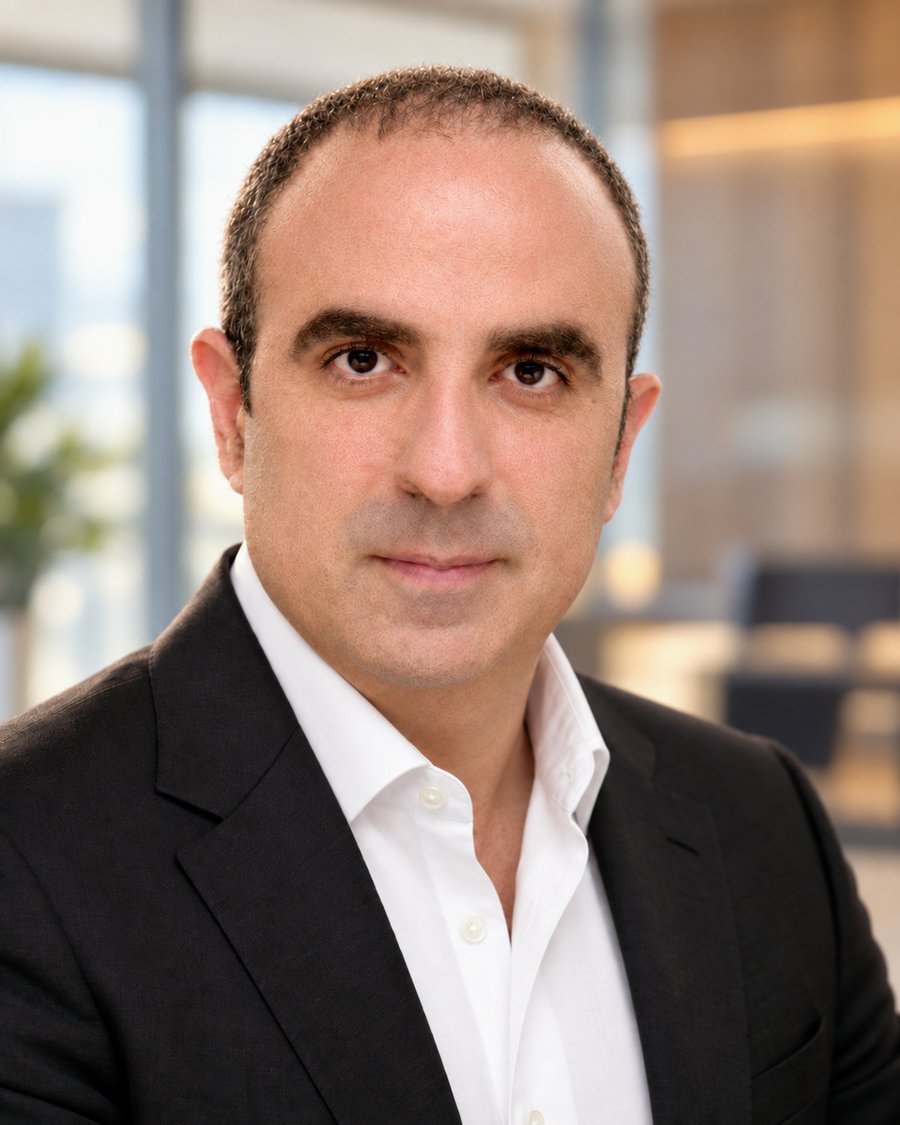
Sherif Eissa is the Founder and Managing Director of Mayava. For twenty-five years he has worked across the line between public and private finance — in government, diplomacy, a multilateral development bank and business — across Africa, Europe, the Middle East and Asia.
Among his most recent roles, he served as Senior Advisor in the Office of the Deputy Executive Secretary and Chief Economist of the United Nations Economic Commission for Africa, working on multilateral development bank reform, the cost of capital and the global financial architecture, and supporting the Commission's engagement in the G20 Africa Experts Panel and the High-Level Working Group on the Global Financial Architecture. He has contributed to the Green Climate Fund's strategic plan for 2028–2031, and in West Africa advised governments and industry associations on bankable, climate-aligned investment, designing a blended-finance structure to mobilise up to US$500 million into Côte d'Ivoire's rice value chain.
From 2020 to 2024 he was Resident Advisor to the Board of Directors of the African Development Bank for the Egypt and Djibouti constituency, across more than 600 sovereign, non-sovereign and public–private operations in a portfolio exceeding US$30 billion. He advised on the US$8.9 billion replenishment of the African Development Fund and the launch of its Climate Action Window, on the expansion of co-financing, which rose 112 per cent to US$3.8 billion in 2023, on the US$750 million hybrid capital issue that opened that market to multilateral lenders, and on more than US$2 billion of risk-transfer transactions.
As Egypt's Economic and Commercial Counsellor to the European Union and the Benelux countries from 2015 to 2020, he worked with the EU institutions on Egypt's development programming and on the EU–Africa negotiations that preceded the Union's 2021–2027 financing for Africa and its €150 billion Global Gateway package. In the same years Belgium rose from 28th to 12th among investors in Egypt. He was elected Africa's representative to the Steering and Advisory Group of the Enterprise Europe Network, and directed the digital transformation of Egypt's Foreign Commercial Service across more than fifty offices abroad.
His negotiating experience spans bilateral, regional and multilateral settings, from the EU–Egypt Neighbourhood Policy Action Plan to free trade agreements. As Senior Trade Policy Advisor to Egypt's Minister of Trade and Industry, he chaired the organising committee of the 2015 Tripartite Summit at Sharm El Sheikh, where twenty-six heads of state concluded the COMESA–EAC–SADC Tripartite Free Trade Area — a step towards the African Continental Free Trade Area. He served on expert groups of UNCTAD, the World Customs Organization and the Union for the Mediterranean.
In Seoul, as Egypt's economic and commercial diplomat from 2005 to 2009, he helped secure Export–Import Bank of Korea financing for the US$4.3 billion Egyptian Refining Company, Egypt's largest public–private partnership, supported Samsung's manufacturing investment in Egypt, and contributed to the early development of the Korea–Africa Economic Cooperation framework. He then moved into business as Vice President of Korea Global Media Group, launching a Korean satellite channel for the Middle East and North Africa sponsored by LG. He began his career in marketing communications in Cairo, with Impact BBDO and Olympic Group.
He holds a BSc in Economics from Cairo University, a Master's in International Trade and Finance from Yonsei University, a Diploma in Marketing Communications from the American University in Cairo, and a Diploma in Green Finance from the Frankfurt School of Finance & Management, where he is a Certified Expert in Sustainable Finance, in ESG and Impact Investing, and in Climate and Renewable Energy Finance. He has trained with the Clingendael Institute, GIZ, the International Development Law Organization and the World Bank Group. He speaks Arabic, English and French.

Start a conversation
Name the project, market or corridor and the decision you face. The more specific the first message, the more useful our first reply.