Mayava

Evidence infrastructure for project finance

An ecosystem where capital can flow.


Mayava builds the evidence projects need, so capital can act with confidence — corridor by corridor, beginning between Korea and Africa.

Build with evidence. Advance with confidence.

Why Mayava exists

The financial system is being rebuilt. Projects still need a way in.

The architecture around development finance is being reworked: more lending capacity at the multilateral banks, guarantee platforms, targets for mobilising private capital, new rails for payment and settlement. Each of these reforms assumes the same thing — that capital can see a project, rely on its record, and move into it.

That is where the system still stalls. The evidence a financier needs is already being produced, by institutions doing serious work. It sits in fragments, under different identifiers and different conventions, and joining it falls inside no single institution's mandate. A project that cannot be evidenced on demand is not slow. It is invisible.

Sometimes the record says more than the reputation.

How it works

Capital moves into a project when three layers are in place.

We build them in order, and we say plainly which exist today.

01Now

Evidence

Know what a project is — and what comparable projects actually did.

We assemble the record behind a project from public institutional sources, grade every figure for how far it can be relied on, and test whether two numbers can fairly be compared before comparing them. The result is a readiness profile: what can be evidenced, what cannot, and what would close the gap.

Available today: readiness diagnostics · corridor advisory · the published method

02Next

Confidence

Records others can rely on without redoing the work.

A disclosure standard that sets out what a project must be able to show, and a way to attest that it does — so a lender, a guarantor and a co-investor can rely on the same record instead of each rebuilding it.

In development with technology partners.

03Later

Flow

Rails through which capital can move into projects.

Where a project carries a record others can rely on, capital can reach it on digital, regulated rails — and, over time, move between those who hold it. This is the destination. It depends on regulators and partners as much as on us, and we say so.

Being specified. Not offered.

Insufficient evidence is an answer we give. When the record is too thin to support a conclusion, we say so, and we say what would change it. It is why the rest of our answers can be relied on.

Corridors

We open corridors one at a time. The first is Korea–Africa.

A corridor is a pair of economies where capital wants to move and evidence is what holds it back. We open each one with partners on the ground, working in the language of the people we serve.

Corridor 01 · Korea–Africa Open

Korea's commitment to Africa grew. Its companies' share of the work did not.

Since the Korea–Africa Economic Cooperation framework was established in 2006, Korea's bilateral official development assistance to Africa has multiplied 15.9 times in constant prices. Over the same period, the value of construction orders Korean firms won in Africa fell to 0.44 times its 2006 level. The commitment is there. What is missing is the evidence that lets companies act on it.

Indexed, 2006 = 1, logarithmic scale. Bars to the left of the line are below their 2006 level.

Sources: OECD DAC2a, donor Korea, recipient Africa, 2006–2024, constant prices A · Korea Eximbank overseas direct investment statistics A · International Contractors Association of Korea A. Retrieved September 2026. A = official primary.

Mayava / Seoul works with Korean companies, financial institutions and public bodies on that decision: finding projects that stand up, preparing to compete for them, and verifying the partners they depend on.

In Korean, at mayava.co.kr ↗

Further corridors open when a partner on both sides has signed.

Founder

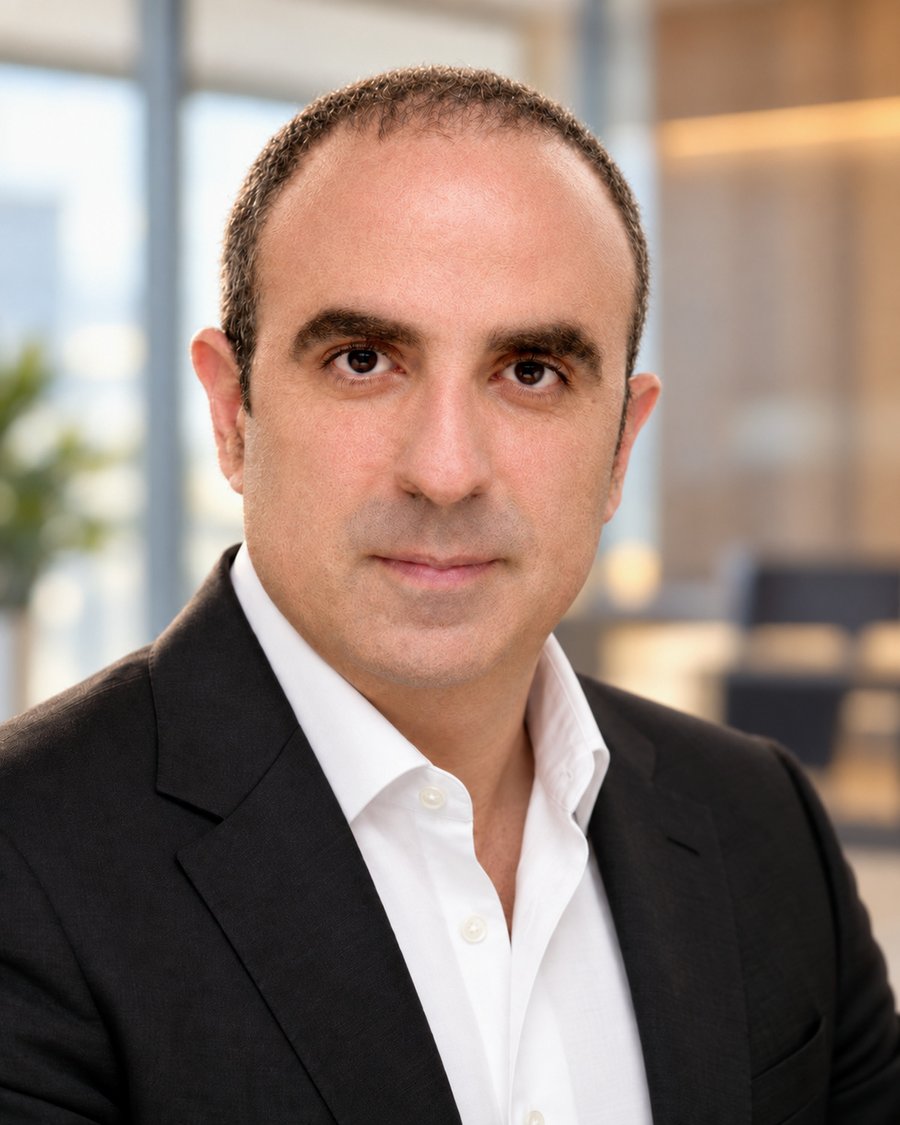
Sherif Eissa, Founder and Managing Director of Mayava
Sherif Eissa

Founder and Managing Director
LinkedIn ↗

Sherif Eissa is the Founder and Managing Director of Mayava. For twenty-five years he has worked across the line between public and private finance — in government, diplomacy, a multilateral development bank and business — across Africa, Europe, the Middle East and Asia.

Among his most recent roles, he served as Senior Advisor in the Office of the Deputy Executive Secretary and Chief Economist of the United Nations Economic Commission for Africa, working on multilateral development bank reform, the cost of capital and the global financial architecture, and supporting the Commission's engagement in the G20 Africa Experts Panel and the High-Level Working Group on the Global Financial Architecture. He has contributed to the Green Climate Fund's strategic plan for 2028–2031, and in West Africa advised governments and industry associations on bankable, climate-aligned investment, designing a blended-finance structure to mobilise up to US$500 million into Côte d'Ivoire's rice value chain.

From 2020 to 2024 he was Resident Advisor to the Board of Directors of the African Development Bank for the Egypt and Djibouti constituency, across more than 600 sovereign, non-sovereign and public–private operations in a portfolio exceeding US$30 billion. He advised on the US$8.9 billion replenishment of the African Development Fund and the launch of its Climate Action Window, on the expansion of co-financing, which rose 112 per cent to US$3.8 billion in 2023, on the US$750 million hybrid capital issue that opened that market to multilateral lenders, and on more than US$2 billion of risk-transfer transactions.

As Egypt's Economic and Commercial Counsellor to the European Union and the Benelux countries from 2015 to 2020, he worked with the EU institutions on Egypt's development programming and on the EU–Africa negotiations that preceded the Union's 2021–2027 financing for Africa and its €150 billion Global Gateway package. In the same years Belgium rose from 28th to 12th among investors in Egypt. He was elected Africa's representative to the Steering and Advisory Group of the Enterprise Europe Network, and directed the digital transformation of Egypt's Foreign Commercial Service across more than fifty offices abroad.

His negotiating experience spans bilateral, regional and multilateral settings, from the EU–Egypt Neighbourhood Policy Action Plan to free trade agreements. As Senior Trade Policy Advisor to Egypt's Minister of Trade and Industry, he chaired the organising committee of the 2015 Tripartite Summit at Sharm El Sheikh, where twenty-six heads of state concluded the COMESA–EAC–SADC Tripartite Free Trade Area — a step towards the African Continental Free Trade Area. He served on expert groups of UNCTAD, the World Customs Organization and the Union for the Mediterranean.

In Seoul, as Egypt's economic and commercial diplomat from 2005 to 2009, he helped secure Export–Import Bank of Korea financing for the US$4.3 billion Egyptian Refining Company, Egypt's largest public–private partnership, supported Samsung's manufacturing investment in Egypt, and contributed to the early development of the Korea–Africa Economic Cooperation framework. He then moved into business as Vice President of Korea Global Media Group, launching a Korean satellite channel for the Middle East and North Africa sponsored by LG. He began his career in marketing communications in Cairo, with Impact BBDO and Olympic Group.

He holds a BSc in Economics from Cairo University, a Master's in International Trade and Finance from Yonsei University, a Diploma in Marketing Communications from the American University in Cairo, and a Diploma in Green Finance from the Frankfurt School of Finance & Management, where he is a Certified Expert in Sustainable Finance, in ESG and Impact Investing, and in Climate and Renewable Energy Finance. He has trained with the Clingendael Institute, GIZ, the International Development Law Organization and the World Bank Group. He speaks Arabic, English and French.
Start a conversation

Tell us the project, the country and the decision.

The more specific the first message, the more useful our first reply.

This opens your email application with the message addressed to us.

General
info@mayava.ai
Founder
sherif@mayava.ai
Korea
For Korean companies and institutions: mayava.co.kr ↗
Office
Mayava LLC
Teheran-ro 79-gil 6, 3F
Gangnam-gu, Seoul